The Ultimate Guide to the Bottle Labeling Machine: Streamlining Packaging and Brand Identity
In the fast-paced world of modern manufacturing, packaging is just as critical as the product itself. The presentation of a container on a store shelf serves as a primary point of contact with consumers, communicating vital product information, regulatory data, and brand identity. At the heart of this final production stage lies the bottle labeling machine, an indispensable piece of industrial equipment that bridges the gap between raw manufacturing and consumer readiness. Whether processing craft beer, pharmaceuticals, essential oils, or household detergents, automated application technology ensures that every container leaves the facility with a pristine, accurately aligned exterior.
Transitioning from manual or semi-automated application to fully integrated industrial systems represents a major milestone for growing brands. Manual application is notoriously prone to human error, resulting in crooked placements, unsightly air bubbles, and uneven spacing that can compromise a brand’s professional image. By automating this process, businesses unlock unparalleled consistency, dramatically scale up their hourly throughput, and reduce material waste. This comprehensive article explores how these complex machines function, the various configurations tailored to different industry needs, and how to select the ideal machinery for your unique packaging setup.
Anatomy and Mechanics of a Modern Bottle Labeling Machine
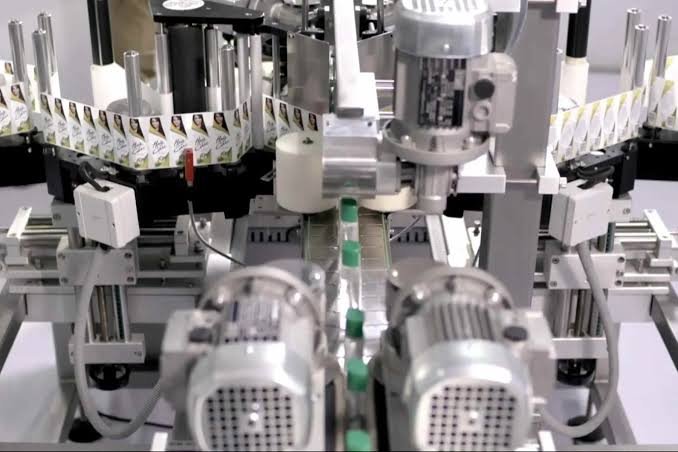
To appreciate the efficiency of an industrial bottle labeling machine, it helps to understand the interconnected components working together seamlessly on the production line. The process begins with the product feeding system, which typically consists of an automated conveyor belt that moves containers through the staging area. Before a label can be applied, the bottles must be precisely spaced and oriented. If containers enter the application zone crowded together, the mechanism may misfire, leading to jammed lines or misapplied stock. To prevent this, machines utilize spacing wheels or indexing screws that introduce a controlled, uniform gap between each incoming container.
Once the bottles are correctly spaced, they enter the application zone, where the labeling head performs the core task. The system relies on a complex web of rollers that maintain steady web tension on the backing paper holding the adhesive stickers. High-precision sensors detect the leading edge of the approaching bottle and signal the stepper or servo motor to dispense the sticker at the exact microsecond required. As the sticker is released from its backing material, an applicator peel blade separates the two layers, pushing the sticky surface directly onto the container.
The final stage of the process involves the wiping or wrapping mechanism, which secures the material firmly to the container surface. For cylindrical objects, this often involves a secondary wrap belt that spins the container against a foam pad, smoothing out air bubbles and ensuring edge-to-edge adhesion. For flat or square containers, flexible brushes or rubber rollers press the material flat against the front, back, or sides. This entire sequence is orchestrated by a central programmable logic controller, allowing operators to fine-tune dispensing speeds, delay times, and sensor sensitivities through a user-friendly digital interface.
Exploring the Primary Categorizations of Labeling Machinery
Packaging machinery is rarely a one-size-fits-all solution, and a bottle labeling machine must be selected based on the specific shape of the container and production volume requirements. The most common structural designs include wrap-around systems, front-and-back setups, and top-down configurations. Wrap-around systems are specifically engineered for cylindrical items, applying a single continuous strip around the circumference of the object, which is highly popular in the beverage, nutraceutical, and cosmetic sectors. Front-and-back systems utilize dual dispensing heads mounted on opposite sides of the conveyor line, allowing manufacturers to apply a decorative front graphic and a dense regulatory back panel simultaneously to oval or rectangular containers.
Beyond structural configurations, these systems are divided by their level of operational automation. Semi-automatic models require a human operator to manually place each container into a cradle and press a foot pedal or micro-switch to activate the cycle. These benchtop units are excellent for small batches, boutique startups, or laboratory environments where production speeds do not exceed a few thousand units per day. Fully automatic inline systems, on the other hand, require zero manual intervention during active runs, pulling containers directly from upstream filling equipment and pushing them down to capping and packing stations at speeds matching hundreds of units per minute.
Another major differentiation is found in the adhesive delivery method. Pressure-sensitive sticker systems utilize pre-printed rolls with self-adhesive backings, offering extreme versatility and cleanliness since they eliminate the need for liquid glue management. Hot-melt and cold-glue systems, conversely, apply raw liquid adhesive to plain paper labels right before bonding them to the surface. While wet-glue systems require more intensive cleanup and maintenance, they are highly favored by mass-market beer, wine, and mineral water producers due to the significantly lower cost of raw paper compared to self-adhesive synthetic materials.
The Compelling Business Advantages of Automating the Process
Investing in a high-grade bottle labeling machine yields a variety of operational advantages that directly impact a company’s financial bottom line. The most immediate benefit is a massive increase in manufacturing throughput. A single automated inline unit can process more containers in an hour than a team of warehouse workers could handle manually in an entire shift. This elevated speed removes production bottlenecks, allowing filling and capping systems to run at peak capacity without being held back by a slow, manual final packaging process.
Beyond sheer operational speed, automation provides a level of aesthetic precision that manual labor simply cannot replicate. A modern system uses fiber-optic sensors to achieve placement tolerances within fractions of a millimeter, ensuring every single item looks identical to the next. This extreme consistency is vital for maintaining shelf appeal in retail environments, where crooked, wrinkled, or bubbling placement can alienate consumers and project an impression of poor product quality. Furthermore, eliminating wrinkles prevents barcode scanning failures at retail checkout counters and distribution warehouses.
Material waste reduction represents another significant economic incentive for transitioning to automated machinery. Manual application often results in ruined stickers and scratched containers due to placement mistakes that require peeling and scraping. Automated systems eliminate this trial-and-error approach, keeping web tension perfectly balanced to prevent tearing and utilizing sophisticated misfeed detection to pause the line if an anomaly occurs. Over long production cycles, saving thousands of premium metallic, clear-film, or textured paper stickers results in substantial, direct cost savings.
Selecting the Right Equipment for Your Production Environment
Choosing the ideal bottle labeling machine requires a thorough evaluation of your current packaging specifications, budget constraints, and future scaling objectives. The physical characteristics of your product containers serve as the primary starting point for this decision. You must analyze the material composition, whether glass, high-density polyethylene, or aluminum, alongside the shape and structural rigidity of the containers. Squeezable plastic tubes demand highly flexible adhesive materials and specialized application pressure, whereas rigid glass wine bottles can withstand the firmer compression forces applied by high-speed rotary wipe-down belts.
Production volume demands and intended line speeds must also be carefully balanced against equipment capabilities. If your facility produces fewer than five thousand units a week, an affordable, heavy-duty benchtop semi-automatic model will easily meet your needs without overextending your operational capital. However, if you anticipate rapid growth or are partnering with major retail distributors, opting for a fully automatic inline frame with a modular design allows you to scale up seamlessly. Look for machines built with standard structural designs that accommodate easy upgrades, such as adding coding printers or vision inspection cameras later down the line.
Finally, place a strong emphasis on machine changeover efficiency and ease of maintenance. In modern manufacturing facilities where multiple product lines run on the same conveyor belt, spending hours recalibrating machinery for a different container size can ruin productivity. Premium equipment offers tool-less adjustments, calibrated hand-cranks, and saveable digital recipes in the touchscreen interface, enabling operators to switch from a small round vial to a large square jug in under ten minutes. Selecting a system constructed from high-grade stainless steel and anodized aluminum ensures long-term resistance to liquid spills and easy sanitization.
Conclusion
The integration of an optimized bottle labeling machine is a transformative step for any manufacturing or packaging operation. By transforming a tedious, error-prone manual task into a highly synchronized, precision-engineered automated sequence, businesses secure a distinct competitive edge. The resulting combination of rapid throughput, impeccable cosmetic consistency, and reduced material waste directly elevates a brand’s market presence while optimizing internal operational costs. As retail shelves become increasingly crowded and consumer expectations rise, securing a reliable, adaptable, and high-performance labeling asset is no longer just an operational upgrade, it is an essential foundation for sustained commercial growth and long-term brand success.