How to Grow Multicolor Bougainvillea for Stunning Garden Colors
1. Introduction
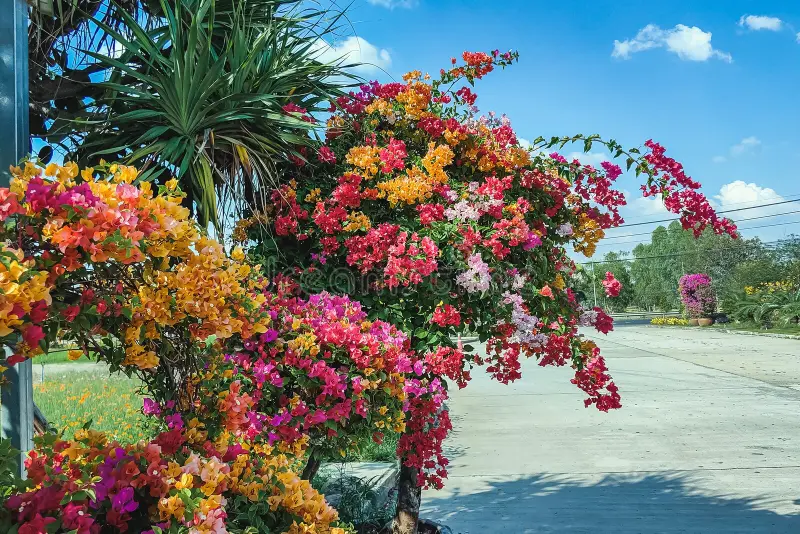
Bougainvillea is one of the most vibrant ornamental plants, famous for its bright, paper-like bracts that come in shades of pink, purple, red, orange, yellow, and white. multicolor bougainvillea plants are especially prized because they can display different colors on the same plant, creating a dramatic visual effect in gardens, balconies, and landscapes. With the right care, you can grow a healthy bougainvillea that blooms profusely almost year-round in warm climates.
2. Understanding Multicolor Bougainvillea
What makes bougainvillea unique is not its flowers but its colorful bracts, which surround small, white tubular flowers. Multicolor varieties often occur due to grafting or natural mutations, where different colored branches are combined on a single plant. This gives a striking mix of colors that can change slightly depending on sunlight, temperature, and pruning practices.
3. Ideal Climate and Growing Conditions
Bougainvillea thrives in tropical and subtropical climates. It loves heat and sunlight, requiring at least 5–6 hours of direct sun daily. In cooler regions, it can still grow but should be placed in pots and moved indoors during frost. The plant performs best in dry, warm conditions and does not tolerate excessive humidity or waterlogging.
4. Choosing the Right Variety
When selecting a multicolor bougainvillea, look for grafted plants or varieties known for color diversity. Some popular types include hybrids that mix pink and white, orange and red, or purple and magenta shades. Always choose a healthy plant with strong stems, vibrant leaves, and no signs of pests or disease.
5. Soil Preparation and Pot Selection
multicolor bougainvillea prefers well-draining, slightly sandy soil. A mix of garden soil, sand, and compost works well. Avoid heavy clay soil, as it can cause root rot. For container planting, choose a pot with drainage holes. Terracotta pots are especially good because they help keep the soil dry, which bougainvillea prefers.
6. Planting Bougainvillea
To plant bougainvillea, dig a hole twice the size of the root ball if planting in the ground. Place the plant gently and fill the hole with soil mixture, pressing lightly to remove air pockets. Water lightly after planting. If using a pot, ensure the plant is centered and stable. Avoid deep planting, as bougainvillea roots prefer to stay slightly compact.
7. Watering and Fertilizing Tips
One of the most important aspects of bougainvillea care is controlled watering. Overwatering is the most common mistake and can reduce blooming. Water only when the topsoil feels dry. During hot summers, watering once or twice a week is usually enough. In winter, reduce watering significantly.
For fertilizing, use a low-nitrogen fertilizer to encourage flowering rather than leaf growth. High phosphorus and potassium content help produce more colorful bracts. Fertilize once every 4–6 weeks during the growing season for best results.
8. Pruning for More Blooms and Color Control
Pruning is essential for shaping bougainvillea and encouraging new growth. Since flowers grow on new branches, regular trimming leads to more blooms. Light pruning after each blooming cycle helps maintain shape and color balance. Avoid excessive pruning at once, as it can stress the plant.
For multicolor varieties, selective pruning can help highlight certain colors by encouraging specific branches to grow more vigorously.
9. Training on Trellises, Walls, and Pots
Bougainvillea is a natural climber and can be trained beautifully on trellises, fences, and walls. Use soft ties to guide stems in the desired direction. In small spaces, it can also be grown in hanging baskets or pots, where it cascades beautifully. Regular training helps maintain structure and enhances visual appeal.
10. Common Problems and Solutions
Some common issues include leaf drop, lack of flowers, and pests like aphids or spider mites. Leaf drop is often caused by overwatering or sudden temperature changes. Lack of blooms usually results from too much nitrogen fertilizer or insufficient sunlight. To control pests, use mild soap spray or neem oil solution regularly.
11. Conclusion
Growing multicolor bougainvillea is a rewarding experience for any garden lover. With proper sunlight, well-drained soil, controlled watering, and regular pruning, this plant can transform any space into a colorful paradise. Its vibrant display of mixed hues makes it one of the most eye-catching ornamental plants you can grow, whether in a garden bed, balcony pot, or climbing wall.